
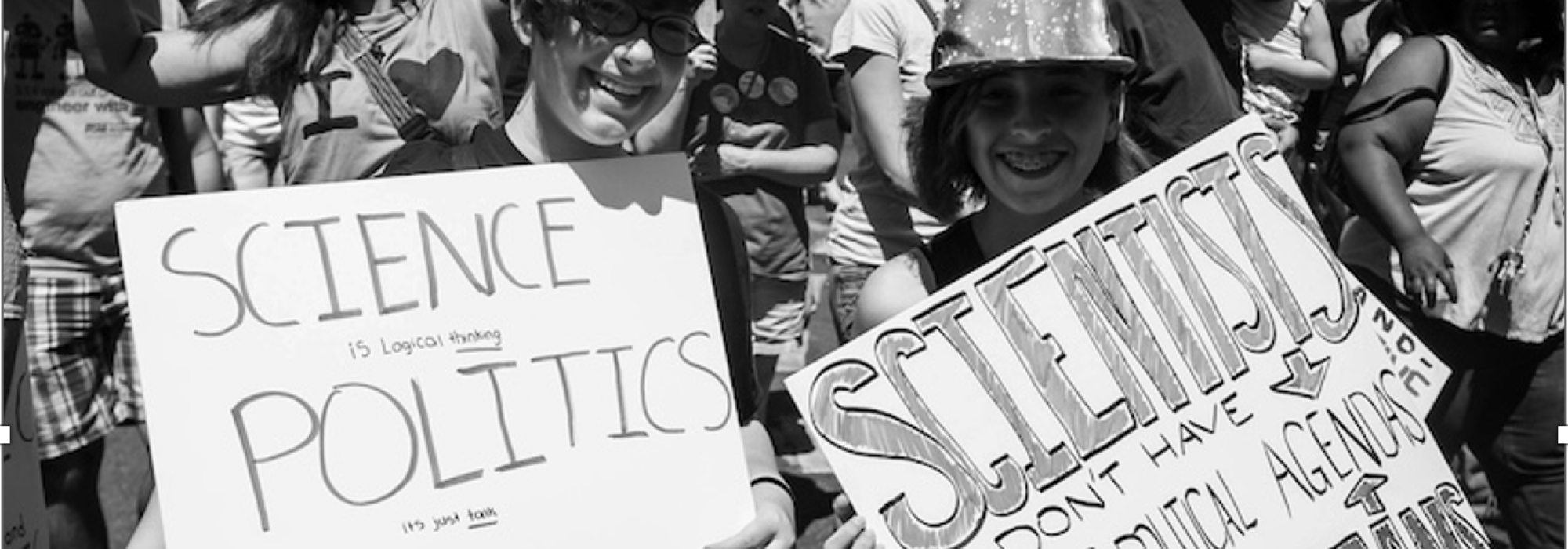

In this blog post, we follow a conversation between two early-career researchers, Diana Borniotto and Océane Duluins, as they grapple with a timely and often contentious question: Can (and should) science be apolitical? Diana, whose PhD research explores the agri-environmental governance of EU agricultural policy and its role in shaping its environmental objectives, and Océane, who investigates the protein transition as the shift away from intensive animal-based production and consumption systems from a systems and interdisciplinary perspective, draw from their own experiences as researchers deeply engaged with political research topics. Our dialogue delves into the topic of science for policy interface, tackling the blurred boundaries between the two, raising questions about neutrality, positionality, responsibility, and the (political) values that underpin research.
Here is our conversation:
** OD will stand for Océane Duluins and DB for Diana Borniotto
OD: Over the past few years, within our research team we had many discussions about whether science can really be considered apolitical, and we’ve often talked about the science–policy interface (SPI) as a space where the boundaries between science and policy become blurred.
DB: I have to admit, I feel some discomfort with the concept itself. I find the SPI quite vaguely defined and often treated as an object in its own right. For me, it’s much less about a fixed interface and more about a process: scientists engaging with policy through interviews, dialogue, and the questioning of policy choices. It’s not mainly about whether research directly leads to policy change, but about scientists being meaningfully connected to other worlds, especially the policy world, but also industry, and civil society.
OD: I find it interesting that you frame the interface as a process rather than an object. For me, this also connects to the different roles scientists are said to play at the interface: the “pure scientist”, the “issue advocate”, the “science advisor”, and the “honest broker” (Pielke, 2007). Many researchers see themselves as external knowledge providers, but quite often they are already embedded in the networks they study or try to inform.
DB: Exactly. From this perspective, the SPI is less about scientists transmitting results and more about how they engage with policy processes through the networks in which they are embedded. Access to policy discussions is not primarily determined by formal research outputs, but by relationships, trust and timing. Being connected to these networks can increase the perceived relevance of scientific work, yet, this proximity can create risks of alignment, intentional or not, with dominant agendas, particularly when certain actors have greater influence over the terms of engagement.
OD: That also raises the question of scientists’ positionality. When should we act as honest brokers, and when do we become issue advocates? Some would argue that advocacy isn’t our role, but the boundary is actually quite thin. What I choose to study as a scientist already reflects my values, and that inevitably shapes how I interpret and communicate my results.
DB: That’s a really important point. In my PhD, the way my research question was constructed wasn’t just the result of my own reflections; it was also shaped through interactions with different actors. That kind of co-creation captures the tension you refer to quite well: working closely with actors can enrich research, but it can also reinforce certain perspectives.
OD: And that doesn’t mean engagement should be avoided. But it does mean that proximity must be balanced with reflexivity, achieved through deliberate moments of distance that allow for reflection and critique throughout the research process. Without that step back, research risks becoming indistinguishable from the interests it studies, and losing its ability to question the structures in which it is embedded.
DB: From that perspective, I see reflexivity as an essential responsibility in the production of knowledge, hence of doing science. Without it, scientists may unintentionally reinforce dominant assumptions and power relations, all while believing they are describing reality. In my view, science’s value goes beyond producing results, it lies in its ability to ask difficult questions, reveal nuance, and challenge taken-for-granted ideas.
OD: I think about this a lot. Reflexivity requires time, debate, and exposure to different perspectives—conditions increasingly squeezed in academic systems that prioritize speed, productivity, and simplified impact narratives. I’m also concerned about science’s place in society. Trust is high when science delivers concrete solutions to urgent problems, but skepticism, fatigue, and politicization are growing. When science appears to prescribe what society should do, it risks reinforcing the very skepticism and disengagement it seeks to address. Still, scientists have a responsibility to inform collective decision-making by producing robust knowledge, clarifying trade-offs, and illuminating the consequences of different choices—without claiming to decide on society’s behalf.
Scientists can’t escape their embeddedness in society. What they can do is engage with that embeddedness openly, instead of seeing it as a flaw, missing with that the target of neutral observer. Reflexivity becomes a way to navigate complexity rather than deny it. In that sense, reflexivity isn’t a constraint on scientists, but a condition for their credibility, relevance, and responsibility in a world marked by uncertainty and contestation.
This raises a further question: would you consider your research political—and is any research ever truly apolitical?
DB: In my view and I feel in our field interrogating agri-food systems, meaningful questions are inherently political because they engage with debates that shape society and the futures we collectively build. Of course, this varies across disciplines; some are more oriented toward fundamental rather than applied research. But even then, the significance of research lies in its capacity to engage, explicitly or implicitly, with political debates. For example, molecular biology may be considered “fundamental,” yet research on GM crops is deeply political, touching on food safety, regulation, and environmental and economic issues. The idea that science can stand outside ideology is deeply ingrained in academia, yet it doesn’t hold up when we examine how research agendas are set, how problems are framed, which methods are considered legitimate, and how results are mobilized in public and policy arenas.
OD: That resonates with my work on the protein transition. Although often framed as technical (developing alternative protein technologies) or descriptive (a shift toward more plant-based diets), the concept carries strong normative assumptions about how food systems should change and which practices are seen as desirable. Competing narratives of transition reflect different visions of society, and choosing one narrative over another is already a political act, whether inside or outside academia.
DB: And you could even go further and say that the very act of problematizing an issue reflects a worldview, just like deciding what you define as ‘good research’. When we define what counts as a problem, we simultaneously define what counts as a solution and what remains invisible. Scientists and funding agencies participate in these boundary-making processes, whether consciously or not.
OD: From this perspective, positionality becomes unavoidable. As scientists, we never enter the research process as detached observers: we carry with us prior values, assumptions, convictions, and intellectual habits shaped by our personal, social, and academic trajectories. These influence how we perceive the world long before research begins. At the same time, positionality continues to shape the research process itself, informing the questions we consider worth asking, the methods we privilege, and the interpretations we find plausible. The real difficulty arises when these influences remain implicit and unexamined.
DB: And this is often confused with neutrality. Analytical distance is not a given, but a practice that must be continuously renegotiated. In my research, this tension was constant. I had to navigate being close enough to understand actors’ constraints, language, and dilemmas, while also maintaining enough distance to analyze their positions critically and avoid uncritically reproducing their frames. Too much distance, however, can lead to abstract or banal research questions that fail to engage with real-world dynamics.
OD: And too much proximity can be just as problematic. Deep immersion can blur the line between analysis and endorsement, making it harder to question underlying assumptions. I increasingly see research as a movement rather than a fixed position. You dive into the field to understand it from within, and then you surface to regain a broader view. Distance, then, isn’t about separation; it’s about perspective. You can’t see the horizon when you’re fully submerged, but you also can’t understand the depth of the water if you never dive.
Reference
Pielke, R. (2007). Pielke, Roger A. The Honest Broker: Making Sense of Science in Policy and Politics. Cambridge: University Press. In The Honest Broker: Making Sense of Science in Policy and Politics. https://doi.org/10.1017/CBO9780511818110